Attorney General Frank Mbeta has come under scrutiny over his involvement in the Executive’s cases against Malawi Electoral Commission (MEC) with some legal minds suggesting that the situation compromises his office’s independence.
The legal minds The Nation interviewed said the Constitution mandates the Attorney General’s office to provide independent legal advice to all arms of government.
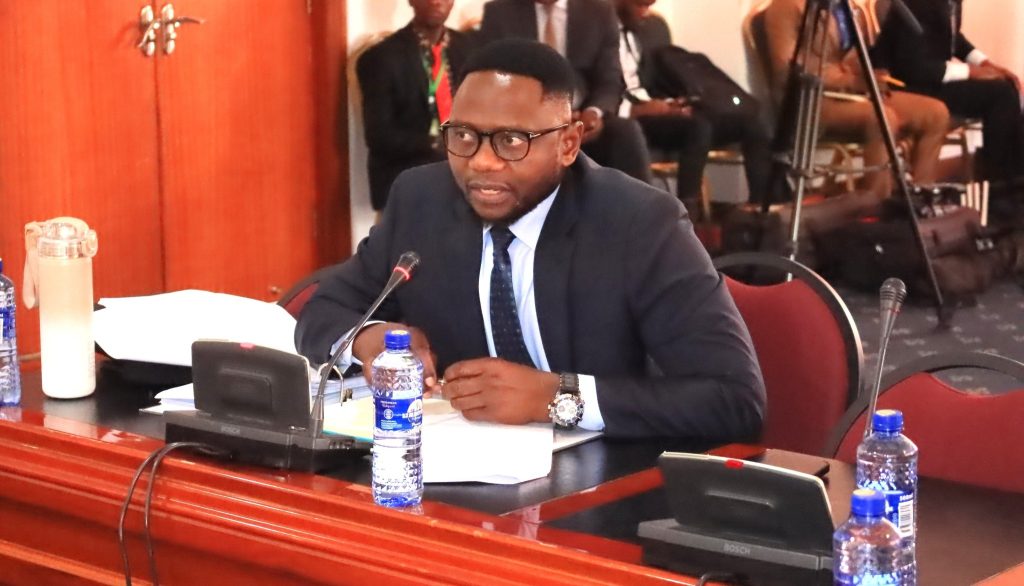
But Mbeta has said his office’s positions are dictated by the law.
The cases against MEC where Mbeta is involved include authorising police investigations into alleged financial mismanagement at the electoral body and representing the Executive as MEC challenged President Peter Mutharika’s October 2025 Executive order for the organisation to relocate its headquarters from Lilongwe to Blantyre.
In an interview, private practice lawyer Benedicto Kondowe said the Attorney General has a duty that goes beyond representing the interests of the Executive.
He said the office carries a constitutional responsibility to uphold the rule of law, protect the public interest and provide independent and objective legal advice to the State.
Kondowe said lessons from the 2019 presidential election case are that the Attorney General’s office must maintain the highest standards of constitutional fidelity, independence and public confidence.
“Where a dispute involves different arms or institutions of government, including independent constitutional bodies such as the Malawi Electoral Commission, the AG must be careful to avoid appearing as an advocate for one side against another. The role should be to provide impartial legal guidance that protects the Constitution and institutional independence, rather than advancing the interests of a particular branch of government,” he said.
On her part, University of Malawi law lecturer Bernadette Malunga urged scrutiny of the Attorney General’s independence, noting the office is appointed and removable by the President.
“From the trend in Malawi, the Attorney General tends to be closer to the President for obvious reasons. If the AG gets too close and provides legal views that are against the President, they may risk their job. To expect complete objectivity from such an appointee is unrealistic,” she said.
On the MEC standoff, Malunga said the situation requires serious consideration and did not rule out reviewing laws governing appointments, including that of the Attorney General.
“We cannot rule out the fact that we need a review, but we know the appointment is guided by the Constitution. Most of the time, people want to align with the ruling government. That is why most of the decisions that were supposed to be made independently are bent,” she said.
But Mbeta said MEC is not an exception to the law and that the legal advice he provides is in the interest of the law and without bias.
“The correct position of law does not change depending on the entity involved. My office has maintained that the correct interpretation of the Constitution and other laws is that MEC should comply with the Executive Order to relocate. As principal legal adviser for all MDAs, I cannot take a different opinion just because MEC commissioners are defiant of the Executive Order and also legal guidance from my office,”he said.
In the judgement that annulled the May 21 2019 presidential election, a five-judge panel of the High Court of Malawi sitting as a Constitutional Court warned that the Attorney General risks taking a partisan role in constitutional disputes, a position the judges found inconsistent with Section 98 of the Constitution.
The court said the office should focus on advising institutions on implementing court directions rather than acting as an advocate in politically charged litigation. The Malawi Supreme Court of Appeal echoed that caution.
In the cited presidential elections case, the then Attorney General, Kalekeni Kaphale, who was representing MEC against petitioners, namely the late Saulos Chilima and Lazarus Chakwera in their capacity as presidential candidates for UTM Party and Malawi Congress Party (MCP)., the court guided that in any constitutional matter the Attorney General ought to be a friend of the Court and not take sides.
Meanwhile, the current MEC cases were referred to the Chief Justice for certification as a constitutional matter.